
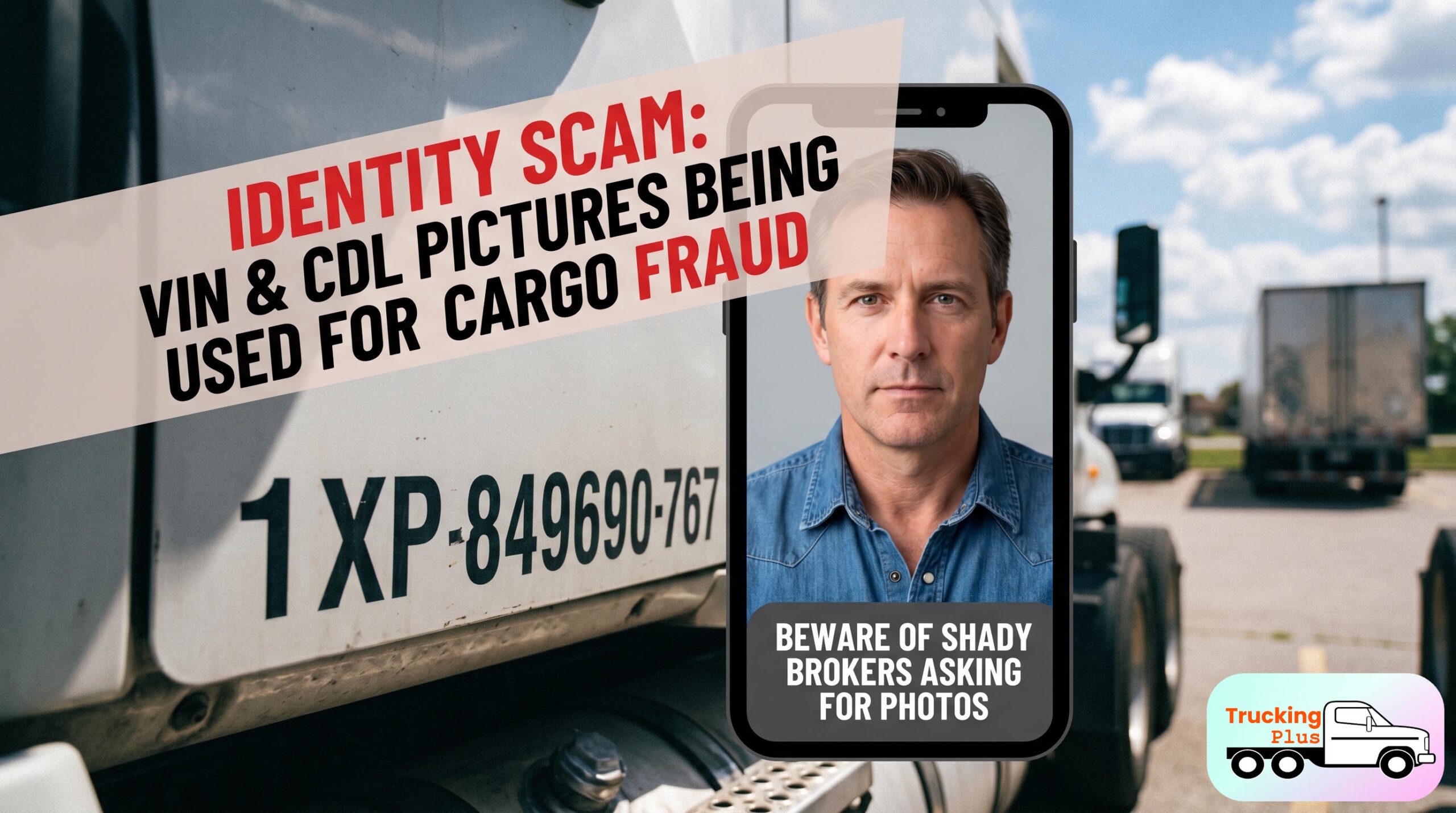
Vetting has become the biggest bottleneck and the biggest risk in modern dispatching. As I have seen many reports of this type of cargo fraud scam, in this post, we will discuss how it is being executed and how you can save yourself.
While honest carriers are fighting to prove they aren’t part of the recent cross-border cargo fraud rings running on expiring non-domiciled CDLs, predatory brokers are exploiting that exact pressure to steal your carrier identity.
Guard Your Assets: The New Scam involving CDL and VIN Picture Costing Carriers Their Insurance
If you are blindly sending truck pictures and CDL copies to unverified brokers to book a load, you are setting yourself up for a fraudulent cargo claim.
The Anatomy of the Double-Cross Cargo Fraud
We will understand how this is executed in four steps.
Step 1: The broker offers a solid rate but demands heavy onboarding photos immediately to “verify compliance” against cargo theft rings before issuing the rate con.
Step 2: You send over the driver’s CDL, truck plates, and clear photos of the door detailing the VIN and MC numbers. They may even trigger a video call to capture the driver’s face.
Step 3: Once the images are secured, the broker suddenly claims the load was cancelled by the shipper or covered by another department.
Step 4: The bad actor uses your photos to book a high-value load elsewhere, steals the cargo, and presents your asset photos to the insurance adjuster to lay the blame entirely on your policy.
Your Dispatch Defense Checklist
Before you let a driver show their face on a video call or text photos of your equipment decals to an unknown broker, run through this non-negotiable checklist:
| Vetting Target | Red Flag | Safe Practice |
| Broker Credit | Not approved or “high risk” by factoring. | Only haul for clear, bonded brokers. |
| Contact Info | Gmail address or phone mismatching SAFER. | Call the official number listed on FMCSA SAFER. |
| Vetting Timing | Demanding VIN/CDL pics before a rate con is sent. | Provide data only after rate con is signed and verified. |
| Image Security | Raw, clean photos of your equipment side-profiles. | Digital text watermark overlaid directly on the VIN/plates. |
What you should do if broker asks for pictures?
Actionable Guardrails for Carriers
Booking a load today feels like walking on a sword. To keep from getting cut, protect your company’s data like it’s your corporate bank account.
- Never Blind-Share ID Assets: Do not send CDL photos, truck plates, or VIN details to a broker you have never worked with until you run a deep background check.
- Verify the Broker with Your Factoring Company: If your factoring company won’t approve the broker for credit, walk away immediately. It doesn’t matter how high the rate is if you end up with an insurance claim.
- Cross-Check on DAT and SAFER: Check their reviews on DAT. Look up their registered phone number on FMCSA SAFER. If the person calling you doesn’t match the SAFER contact, it’s an identity theft ring.
- Watermark Your Identity Images: If a verified broker requires a truck picture for high-value freight vetting, use a simple mobile phone editor to overlay a text watermark across the photo: “FOR VETTING ONLY WITH [BROKER NAME] – DATE.” This makes the image completely useless for fraud elsewhere.
Bottom Line:
Honest brokers have legitimate, integrated digital vetting systems to curb fraud. If a broker is bullying you for raw smartphone pictures of your driver’s license and truck VIN over text message, they are likely trying to steal your identity. Protect your MC number.
Follow and subscribe to our newsletter for such useful and industry related posts.